
WCCI-2026 Tutorial - Advances in EMO and Decision-making
Tutorial on Advances in EMO and Decision-making
2026 IEEE World Congress on Computational Intelligence
Title of the Tutorial
Advances in Evolutionary Multi-criterion Optimization and Decision-making
Short Description
This tutorial will begin with a quick overview of the fundamentals of evolutionary multi-objective optimization (EMO) and few multi-criteria decision-making (MCDM). The main focus, however, will be on recent advancements in EMO, including partial Pareto-set search, knowledge discovery, robust and reliability-based optimization, multi-objectivization techniques, regularized EMO, innovation path discovery, bilevel multi-objective optimization, and surrogate-assisted optimization. These topics aim to give participants a deeper understanding of the scope of EMO and inspire new research directions. A key component of the tutorial will be the Machine-DM concept, which uses trained machine learning (ML) models to emulate human decision makers and enables the creation of benchmark problems for interactive MCDM. This integration is expected to attract interest from the EC and ML communities. To further engage participants, the tutorial will include hands-on simulations demonstrating EMO algorithms for generating Pareto fronts and the Machine-DM framework for selecting preferred solutions using Bench-iMCDM methods. GitHub resources and code examples will be introduced to support practical understanding and future exploration.
Organizers' Details

|
Professor Kalyanmoy DebProfessor Kalyanmoy Deb is a Professor in the Department of Computer Science at the University of Alabama, USA. His research interests include computational intelligence, machine learning, and multi-criterion optimization and decision-making. He has received several prestigious awards including the IEEE Evolutionary Computation Pioneer Award, Infosys Prize, CajAstur Mamdani Prize, Edgeworth-Pareto Award, and the Bessel Research Award (Germany). He is a Fellow of ACM, ASME, and IEEE. Prof. Deb has authored over 650 research papers and has more than 235,000 Google Scholar citations with an h-index of 146. More information can be found at https://www.coin-lab.org. |
|
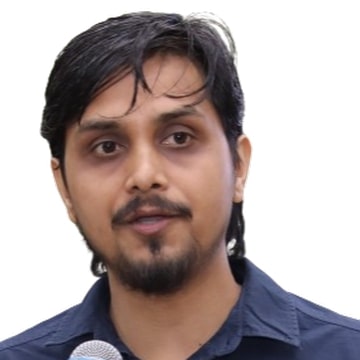
Dr. Deepanshu YadavDr. Deepanshu Yadav is a Post-doctoral Researcher at the Department of Computer Science, University of Alabama, USA. Dr. Yadav's research interest includes data-driven modeling, optimization, and interactive multi-criteria decision making. He received his integrated M.S. + Ph.D. degree from Indian Institute of Technology (IIT) Madras, India. Dr. Yadav has been a Visiting Research Scholar at Michigan State University, USA. He earned his B.Tech. degree from National Institute of Technology (NIT) Kurukshetra, India. Further information about his research is available on https://deepanshuiitm.github.io/webpage/. |
Demo on pymoo and Machine-DM
Tutorial Outline
| Section | Topic | Duration |
|---|---|---|
| 1 | Introduction to Multi-Objective Optimization | 5 min |
| 2 | Key EMO Algorithms Test Problems & Performance Metrics |
10 min |
| 3 | Key MCDM Approaches | 10 min |
| 4 | Advances in Evolutionary Multi-Objective Optimization (EMO) | 40 min |
| (a) | ▸ Many-Objective Optimization | 5 min |
| (b) | ▸ Partial Pareto-Set Search | 5 min |
| (c) | ▸ Knowledge Discovery | 5 min |
| (d) | ▸ Robust Optimization | 5 min |
| (e) | ▸ Surrogate-Assisted Optimization | 5 min |
| (f) | ▸ Regularized EMO | 5 min |
| (g) | ▸ Innovation Path Discovery | 5 min |
| (h) | ▸ Other Emerging Topics (incl. ML-based EMO) | 5 min |
| 5 | Machine-DM based MCDM | 15 min |
| 6 | Hands-on Demonstration pymoo + iBench-MCDM GitHub Codes |
5 min |
| 7 | Q&A Session | 5 min |
Venue
Maastricht Exhibition & Congress Centre (MECC)
6229 GV Maastricht
The Netherlands
Further details on venue is available on https://attend.ieee.org/wcci-2026/venue-2/.
Information for Attendees
This tutorial is aimed towards new-comers and experts interested and/or working in EMO field for them to have the basic fundamentals of EMO methods and then to know recent advancements of the field, so they can get certain directions for research. The iBench-MCDM discussion is completely recent and new, and will motivate EMO and EC researchers to get more involved in the MCDM part of the multi-objective optimization. Moreover, due to the involvement of machine learning approaches, the tutorial may be of interest to IJCNN researchers as well.